-
 Call Now ! +91-9910111641
 -
 Email Now ping@ncpnuggets.com
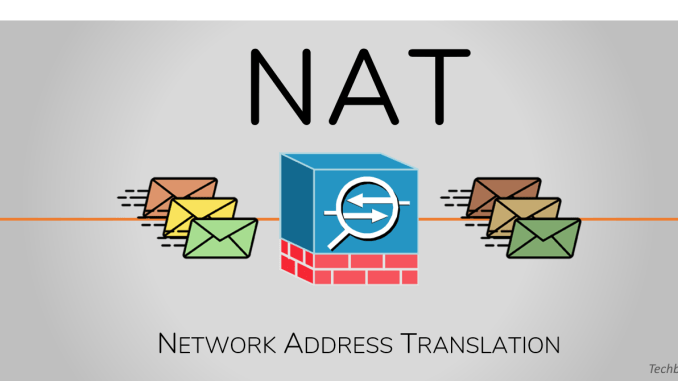
This section describes Network Address Translation (NAT) and how to configure the firewall for NAT. NAT allows you to translate private, non-routable IPv4 addresses to one or more globally-routable IPv4 addresses, thereby conserving an organization’s routable IP addresses. NAT allows you to not disclose the real IP addresses of hosts that need access to public addresses and to manage traffic by performing port forwarding. You can use NAT to solve network design challenges, enabling networks with identical IP subnets to communicate with each other. The firewall supports NAT on Layer 3 and virtual wire interfaces.

Anwar did his B.E. in Electronics & communication from Jamia Millia Islamia (a Central University), New Delhi, India. He has more than 27 years of industry experience in india & abroad. He started his career in CISCO domain in mid 2004 when he was in Kuwait Army, State of Kuwait. Since then he has been enlightening minds in the networking field and provides guidance and training to both highly skilled professional as well as freshers.
He has ultimate knowledge in multiple domain like CCIE(R&S), CCNP(R&S), BGP, MPLS, CCNA(R&S), CCNA(SEC), PALOALTO, LTM, GTM, SDWAN, MCP, MCSA,ASA, DMVPN, IPV6, QOS etc...
Currently he is the Director of NETWORKING CORE PROGRAM.He has worked with CISCO Network Academy(Jamia Hamdard), Minstry of Defense - Kuwait Army, CMC, L&T, Vision Communication, VTPL etc.